Most lifters treat recovery like dessert. Optional. Earned. Skippable when life gets busy.
That framing is exactly why their progress plateaus.
Recovery isn't the cooldown to training. It's the second half of it. The stimulus you create in the gym is just an input. The adaptation, the actual change in your body, happens in the hours and days after, when your nervous system, connective tissue, and metabolic systems repair and rebuild. Skip that window and the work you did in the gym gets wasted.
The biology in one paragraph
Training creates micro-damage and a controlled stress response. Your body reads that stress signal and reorganizes itself to handle it better next time. That reorganization is the gain. It happens during recovery. No recovery, no signal interpretation, no gain. You walked into the gym, made yourself sore, and missed the upside.
What "good recovery" actually looks like
Three layers, in order of leverage:
Sleep. Non-negotiable. Seven hours minimum if you train hard, eight if you train hard and operate in a job that demands real cognitive output. Sleep is when growth hormone peaks and your central nervous system clears its inhibition. Lifters who consistently sleep five hours and wonder why their squat stalled. there's your answer.
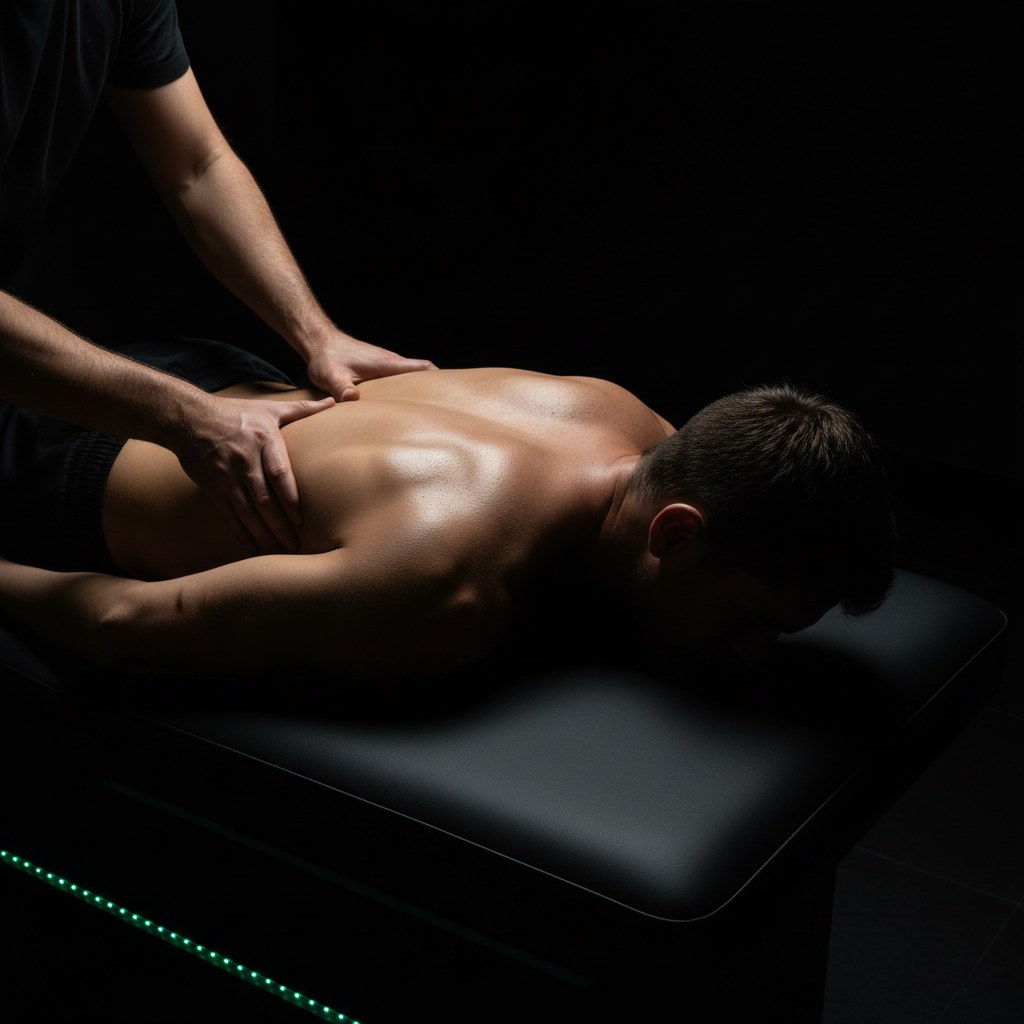
Targeted soft tissue work. Not generic massage. Targeted work on the muscle groups that just absorbed load, sequenced for the goal. The same hands that work on NBA athletes during their playoff run do the same thing, just dialed down, on the lifter walking in off the gym floor after a heavy Friday.
Modality stacking. Red light therapy while EMS runs. Sauna into cold plunge. Normatec compression after a flush block. Each of these does one thing in isolation. Stacked correctly, they compound.
The mistake most athletes make
They train hard six days a week and then complain that they feel beat up. They're not beat up because they're training too much. They're beat up because they're treating recovery like an afterthought instead of a programmed input.
Your training week needs a recovery plan the same way it needs a training plan. Specific. Dosed. Tied to what you're loading and when.
What we do at Legendary Recovery
We program recovery the way a strength coach programs lifting. Heavy week? Front-load tissue work and red light at the start. In-season? Mid-block flush sessions to clear residual fatigue without losing adaptation. Coming back from injury? A slow ramp of EMS plus manual therapy to wake the muscle up before you load it.
The athletes who get the most out of us aren't the ones with the worst injuries. They're the ones who treat us like part of their training week, not a place they go when something hurts.
The simple takeaway
If you're training hard and not recovering with the same intention, you're leaving most of your potential on the table. Fix the sleep first. Then book a real recovery session, get the protocol notes, and run them like you'd run a strength program.
That's how the work you're already doing in the gym actually shows up in your output.